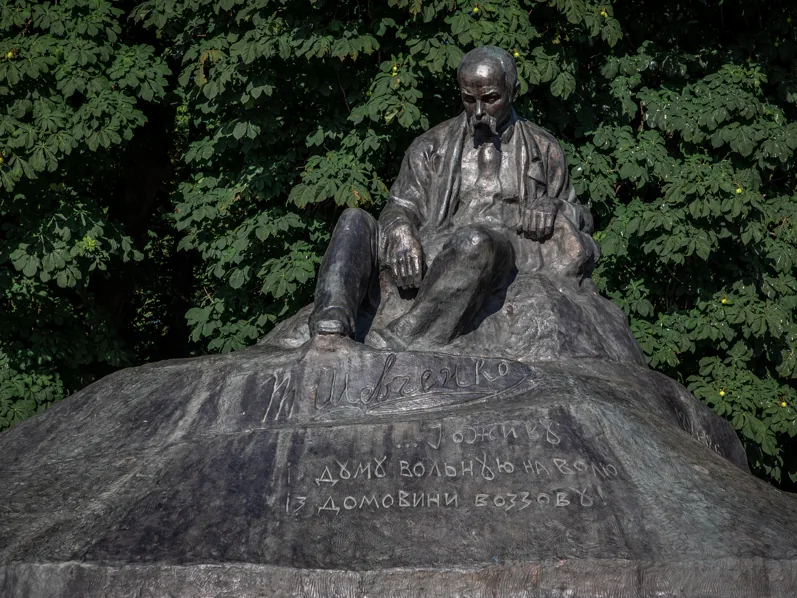
The world's first monumental statue of Taras Shevchenko
Unveiled in 1918, this was the first monumental statue of Taras Shevchenko anywhere in the world. Raised during the turbulent years of the Ukrainian Revolution, it became a symbol of the struggle for freedom and national identity. Today it is among the most significant historic landmarks of the Romny area.
Monument · 1918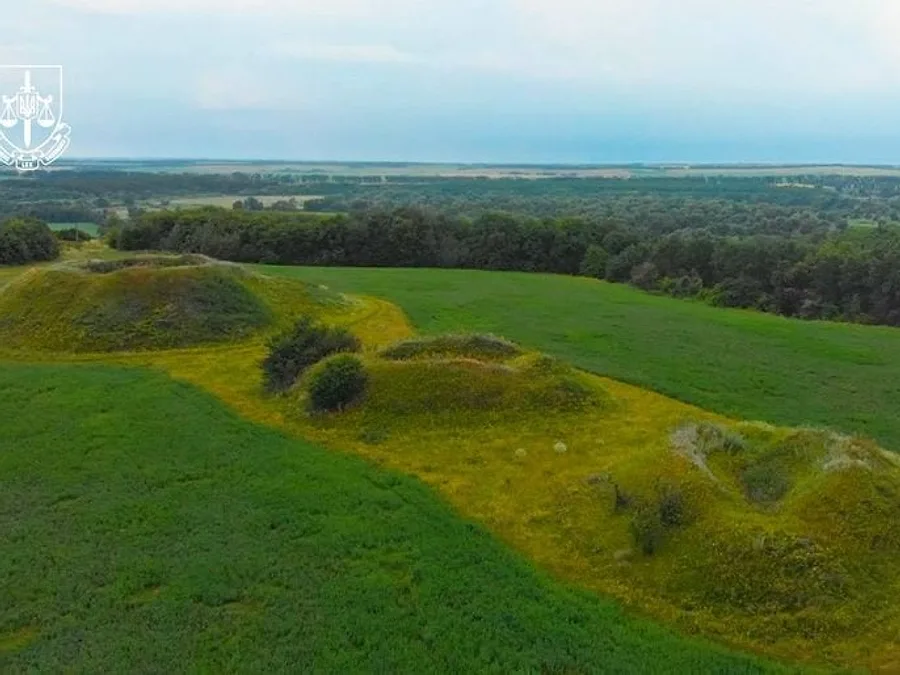
"Staichyn Verkh" burial mounds (Posullia kurhans)
Staichyn Verkh is not a single mound but an entire Scythian necropolis on the high plateau above the Sula. Over 600 mounds were counted here at the start of the 20th century; some 250 are still visible. The largest carry their own names — Starsha Mohyla, Tsarska, Storozhova. Starsha Mohyla stands 21 metres high and remains the tallest kurhan on the Dnipro's left bank. They were raised in the 6th–4th centuries BC.
Burial mounds · Scythian era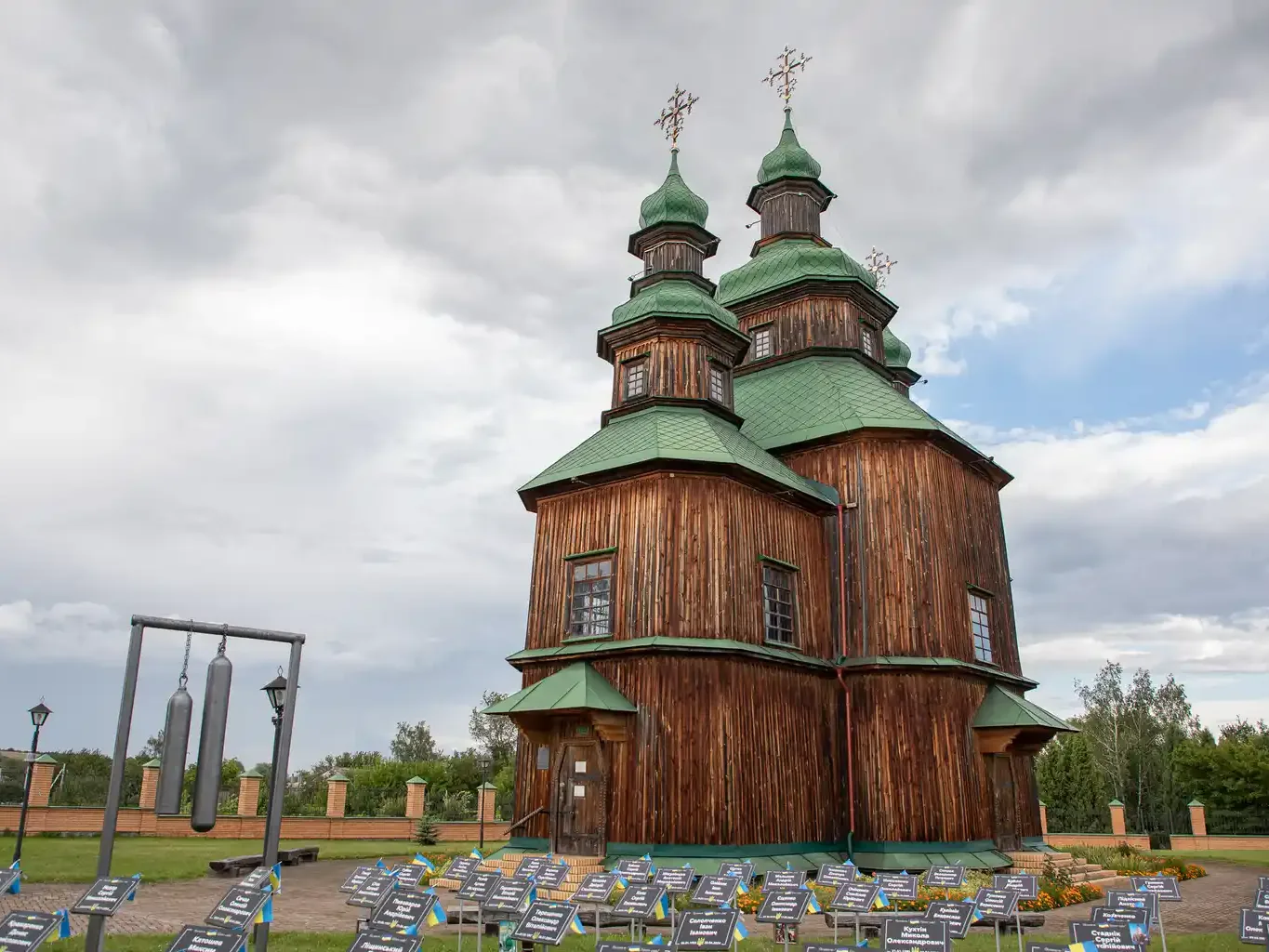
Wooden Church of the Holy Trinity
The Church of the Holy Trinity is a rare example of eighteenth-century Ukrainian wooden architecture. It preserves the traditional Cossack building style and remains the spiritual symbol of Pustoviitivka. The historic memorial complex with a windmill and an old cart stands beside it.
Wooden church · 18th c.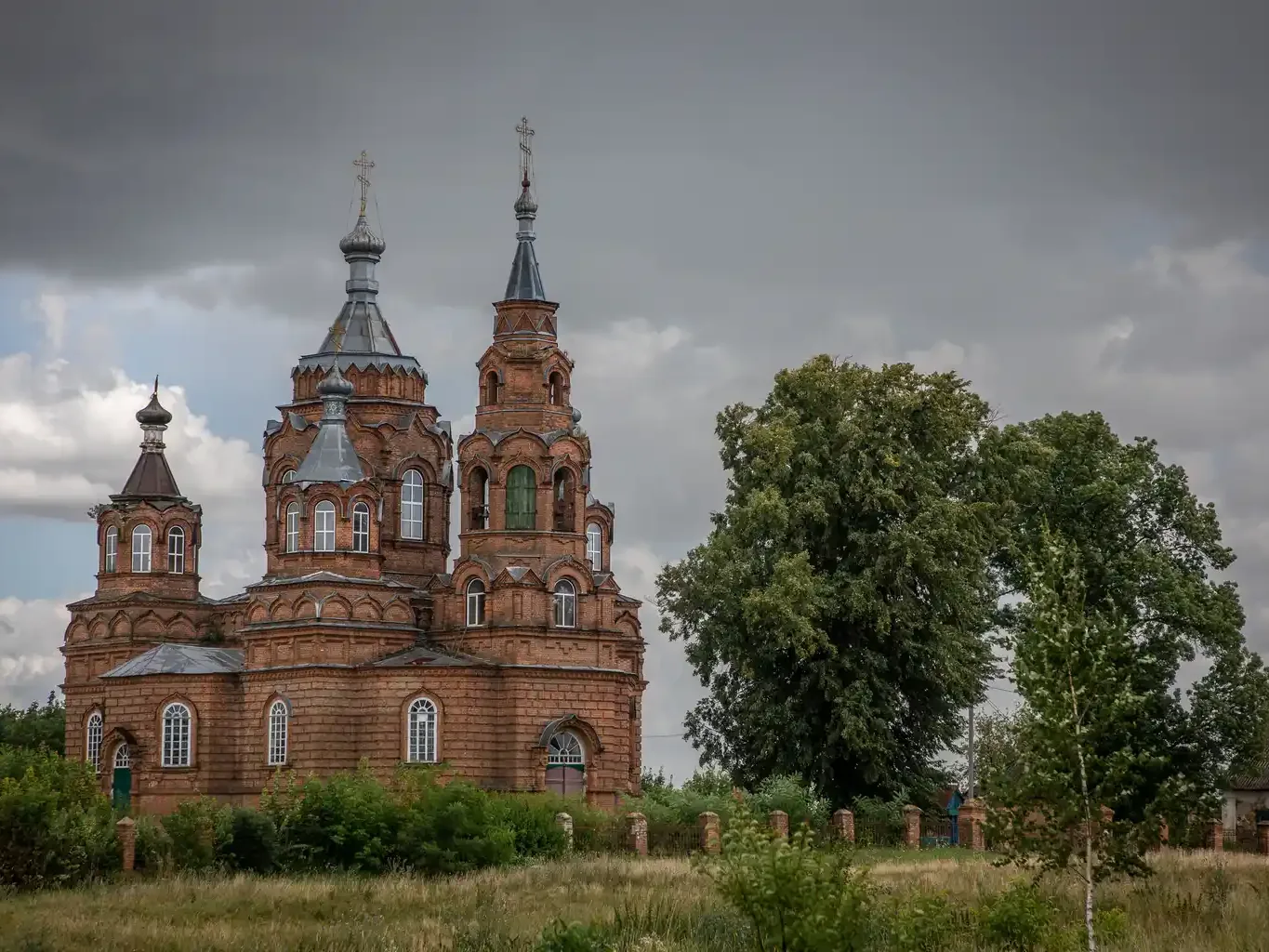
St Nicholas Church
This brick church is a monument of national significance and one of the best-preserved churches of the Romny area. Its architecture combines classical forms of Ukrainian church building with the atmosphere of the nineteenth century. The church remains an important spiritual and historic landmark of the region.
Church · 19th c.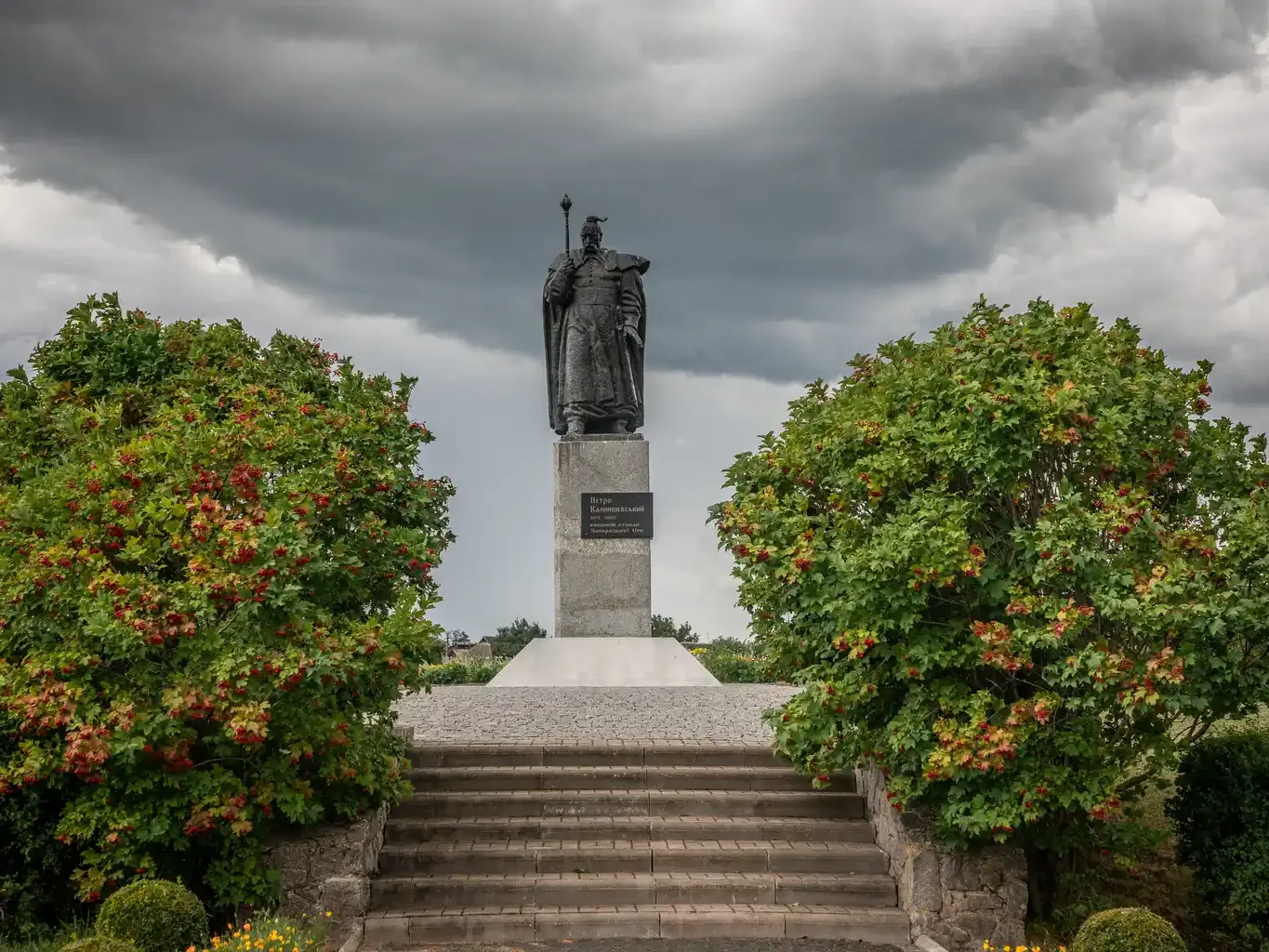
Monument to Petro Kalnyshevsky
Pustoviitivka is considered the birthplace of Petro Kalnyshevsky, the last kish otaman of the Zaporozhian Sich. The monument honours the Cossack leader who became a symbol of resilience, courage and the struggle for Ukrainian statehood.
Monument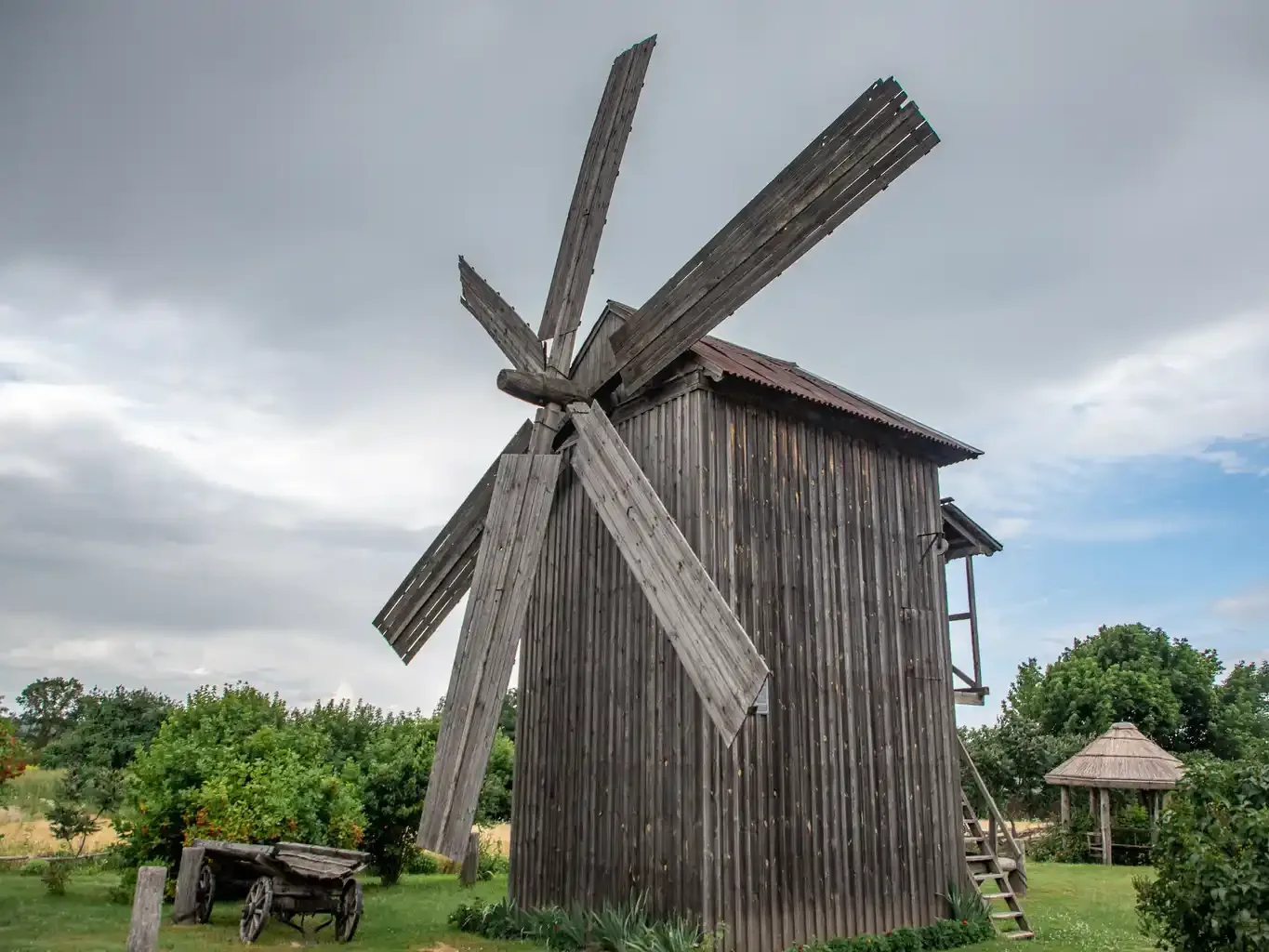
Memorial complex "19th-century windmill and cart"
The complex recreates the atmosphere of a nineteenth-century Ukrainian village. An authentic wooden windmill and an old peasant cart show the traditional everyday life and farming of our ancestors. This place brings history, architecture and cultural heritage together as one.
Memorial complex · 19th c.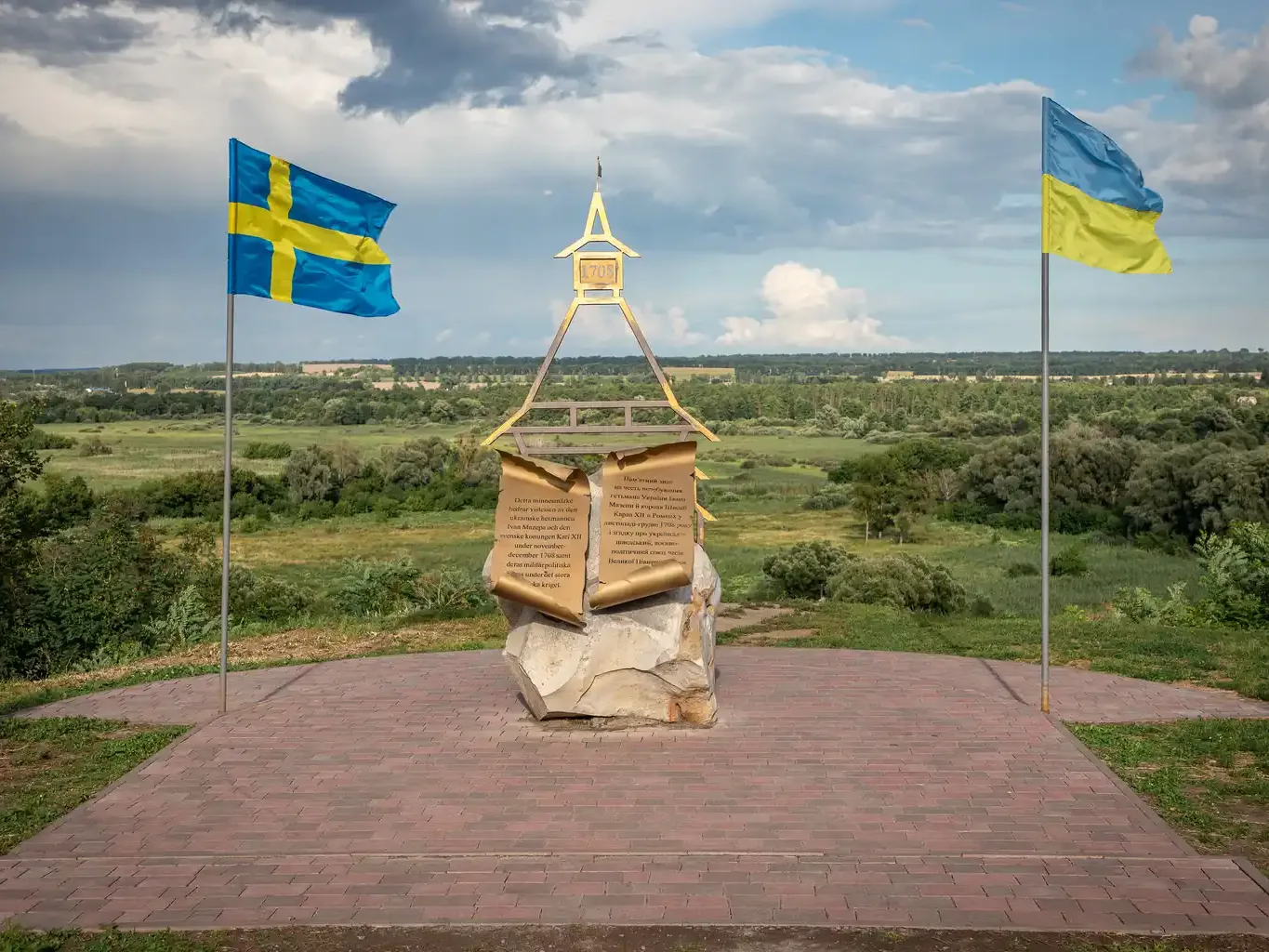
Memorial sign to Ivan Mazepa and Charles XII
The memorial sign marks the stay in Romny of the Ukrainian Hetman Ivan Mazepa and King Charles XII of Sweden in the autumn of 1708. It was here that events unfolded which became an important part of the history of the Great Northern War and of Ukraine's struggle for independence.
Memorial sign · 2024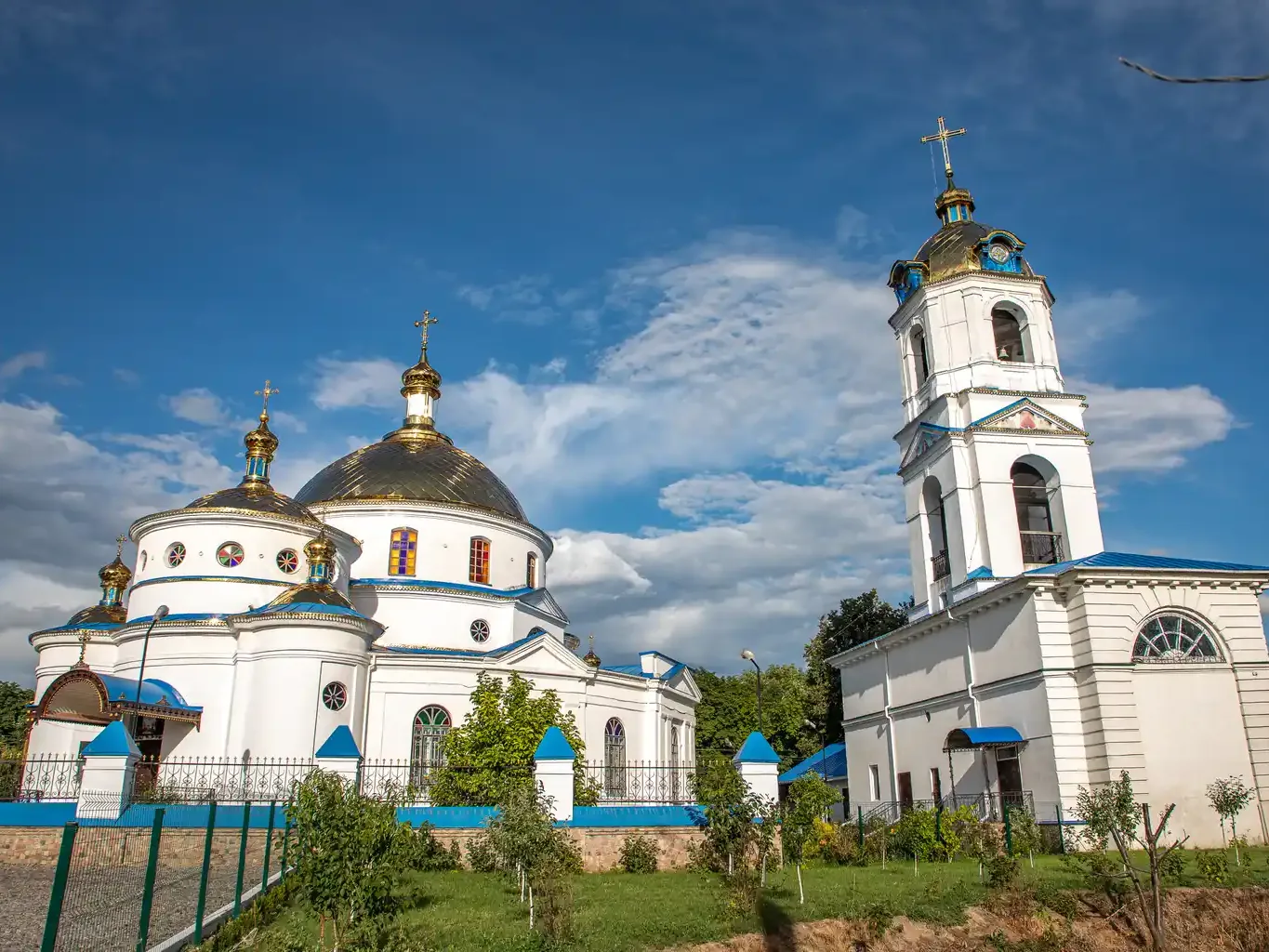
Ensemble of the Ascension Church
The Ascension Church is one of the most notable architectural landmarks of the town. Its ensemble brings together the church, the bell tower and the surrounding historic buildings, shaping the distinctive look of old Romny. This place is an inseparable part of the cultural heritage of the Sumy region.
Architectural ensemble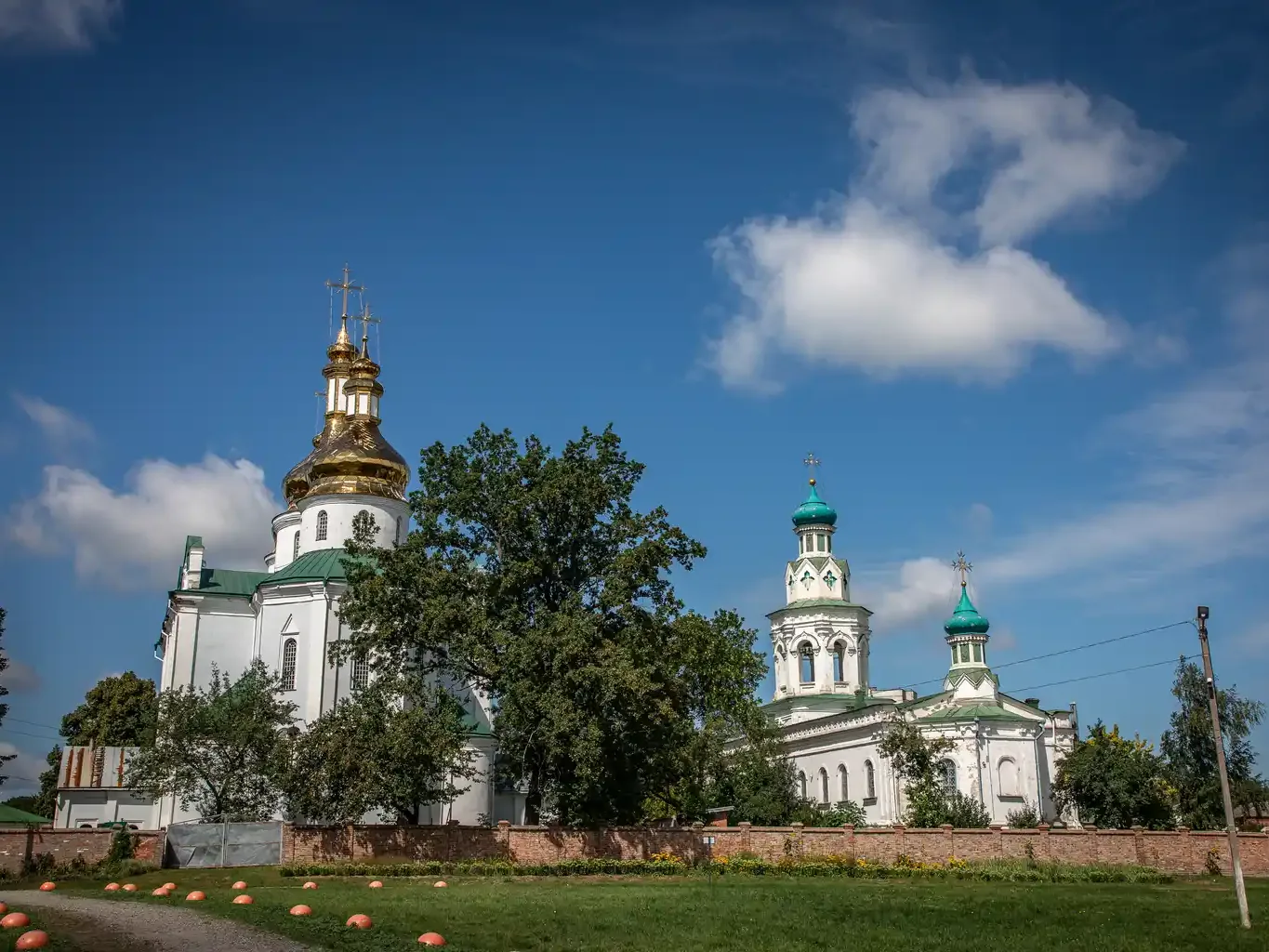
Holy Spirit Cathedral and St Basil's Church
The Holy Spirit Cathedral together with St Basil's Church form one of Ukraine's most valuable sacred ensembles. For centuries they were the spiritual centre of the town and witnesses to many historic events. Today they are among the chief architectural adornments of Romny.
Sacred ensemble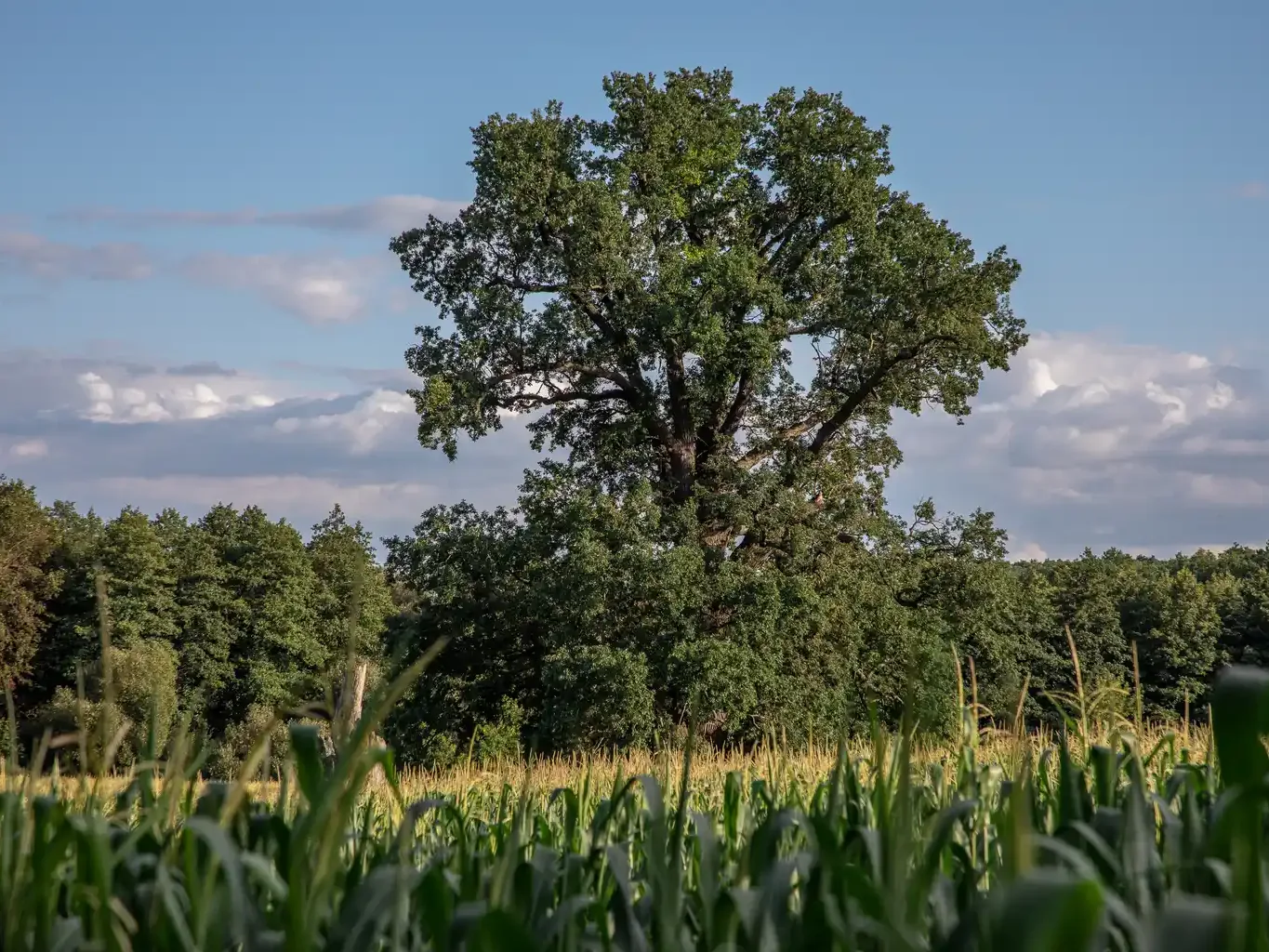
The giant oak
The giant oak is a natural landmark several centuries old. Local lore says the tree remembers the times of the Ukrainian Cossacks. Its massive trunk and sprawling crown stand for strength, endurance and the bond between generations.
Natural landmarkThe full register of protected sites
The “Main” section holds the landmarks that already have a photo and a story. The hromada's register lists 175 heritage objects in total; below is that official list as the hromada keeps it — names only, in Ukrainian. Names shown as links already have a card of their own.
Monumental art 5
The world's first monumental statue of Taras Shevchenko
Unveiled in 1918, this was the first monumental statue of Taras Shevchenko anywhere in the world. Raised during the turbulent years of the Ukrainian Revolution, it became a symbol of the struggle for freedom and national identity. Today it is among the most significant historic landmarks of the Romny area.
Monument · 1918“Prometheus Bound and the Worker Unbound” monument
Photo and story in preparation
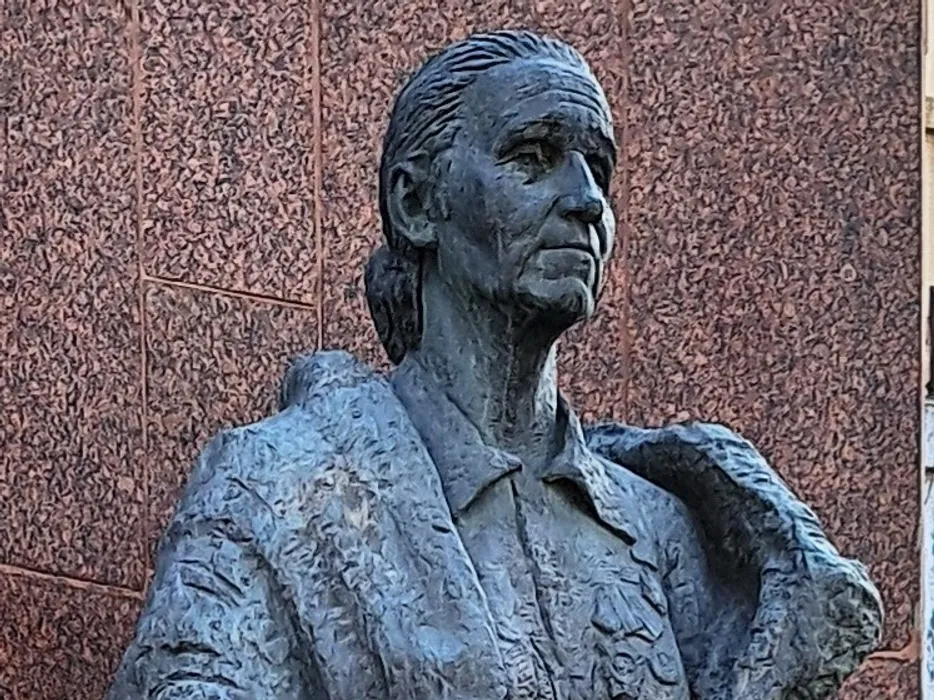
Monument to the Mother Heroine Oleksandra Derevska
Through the war years and the ruin that followed, Oleksandra Derevska raised 48 orphaned children of different nationalities. The monument was unveiled for the 80th anniversary of her birth; it is the work of the sculptor V. Mynenko and the architect A. Synko. The bronze half-figure stands 1.72 metres tall: a middle-aged woman looking into the distance, a tasselled shawl over her shoulders, her hands slightly enlarged by the sculptor for expressive effect. The deeply lined face speaks of a hard life, and the whole figure of the inner wealth of an ordinary mother.
Monument of history and art · 1982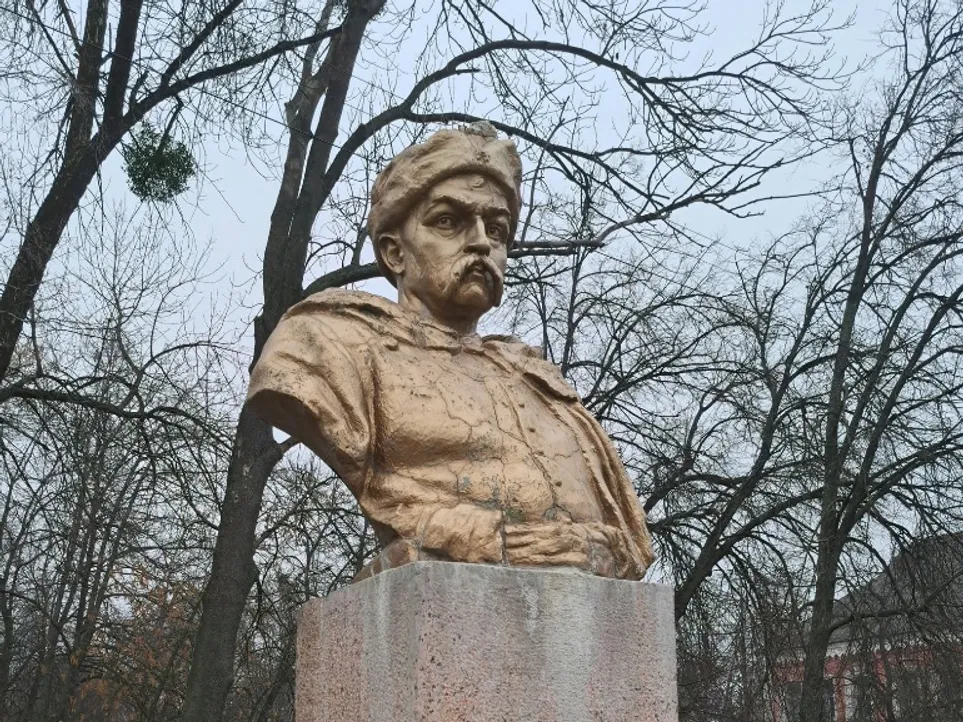
Monument to Bohdan Khmelnytsky
A bust of the hetman of the Zaporozhian Host and founder of the Cossack state, raised in 1953. The 0.9-metre sculpture stands on a rectangular pink granite pedestal 2.6 metres high. The bust is carried out in the Soviet sculptural manner of the 1950s: regular features of a strong-willed face, a gaze fixed on the distance, a hetman's cap and a cloak thrown over the shoulders. The monument was restored in 2009.
Monument of history and art · 1953Monument to Kuzma Hnidash, Hero of the Soviet Union
Photo and story in preparation
Architecture and town planning 31
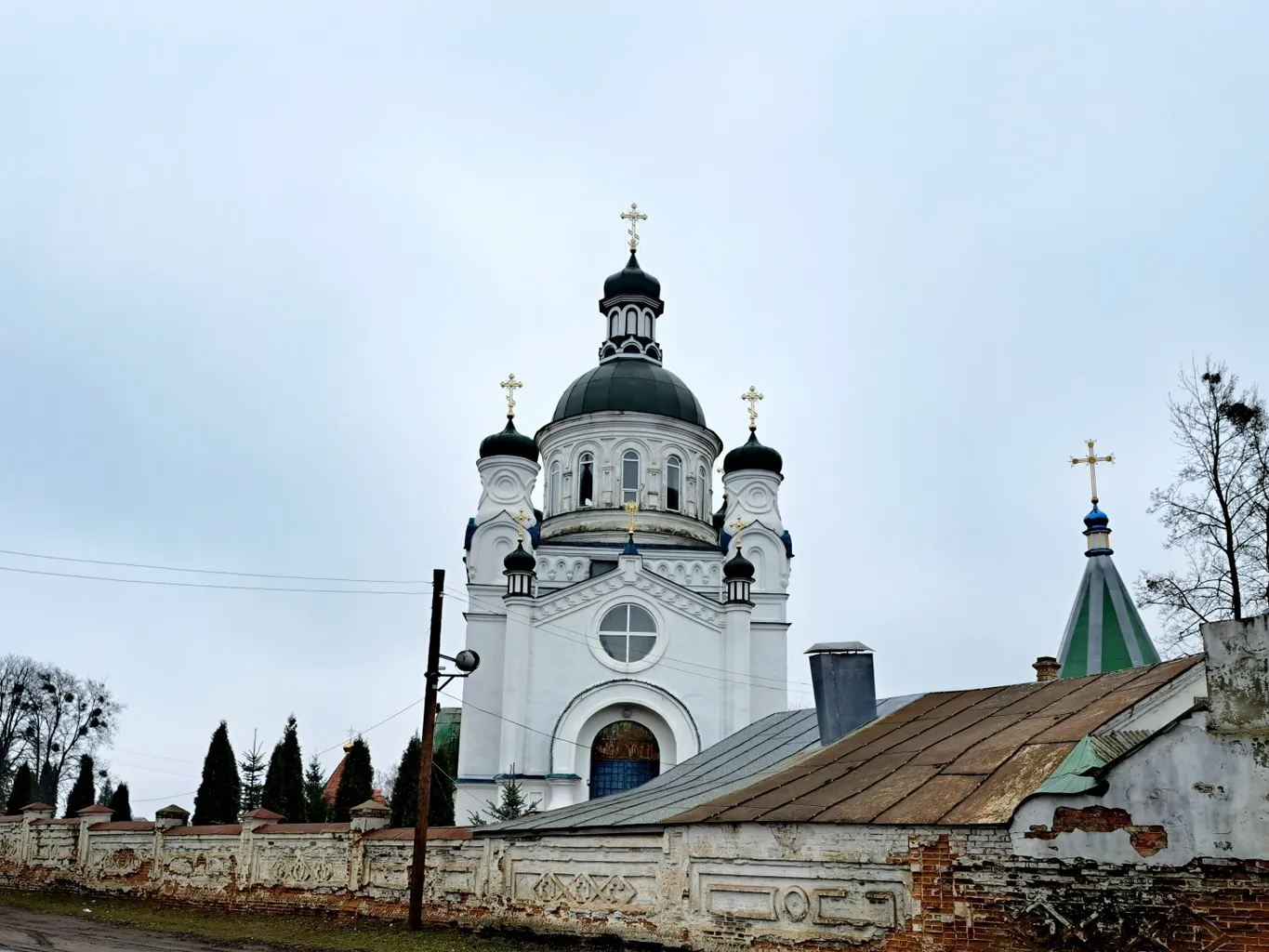
All Saints Church
It is known as the cemetery church, because it stands in a cemetery, and it was built out of grief. Yelyzaveta, the only daughter of the honorary citizen of Romny Leontii Ternovets, drowned in the Sula, and her father raised a church so that she would be remembered. Construction began on 22 May 1866 to a design by the architect V. Chervinskyi and took seven years; the church was consecrated on 30 May 1873. Services continued here even under Soviet rule and stopped only in 1941, when the building was turned into a forge. Inside are relics and icons, among them an icon of St Panteleimon the Healer more than 115 years old.
Church · mid-19th century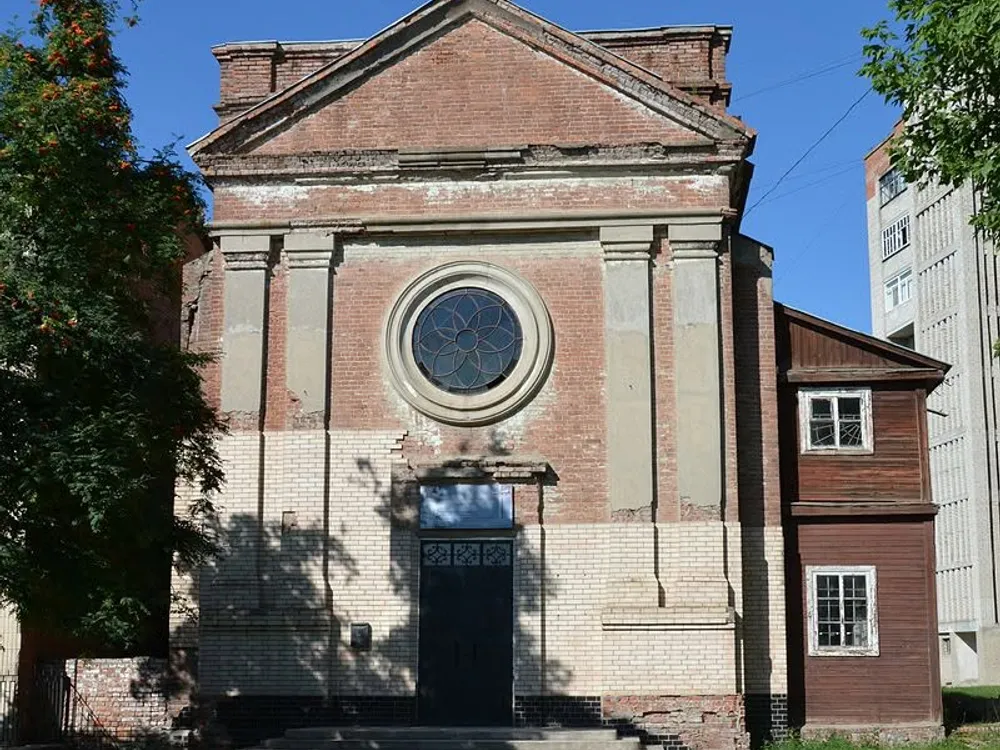
Church of the Immaculate Conception of the Blessed Virgin Mary
At the end of the 19th century Romny grew along with its industry, and among the newcomers were Roman Catholics. The present church was built at the start of the 20th century to a design by the engineer Yasnovskyi, funded by the priest Ioan Dauhis; in 1910 it was consecrated by Bishop Jan Cieplak. Red brick, four rectangular Doric columns flanking the doors, and above them a stained-glass window shaped like the petals of a lily, the symbol of the Virgin's purity. A tall stone bell tower once rose on its left side.
Catholic church · early 20th centuryGirls’ gymnasium
Photo and story in preparation
Public school where Abram Ioffe studied — academician of the USSR Academy of Sciences and Hero of Socialist Labour
Photo and story in preparation
Town school (architect Kaura)
Photo and story in preparation
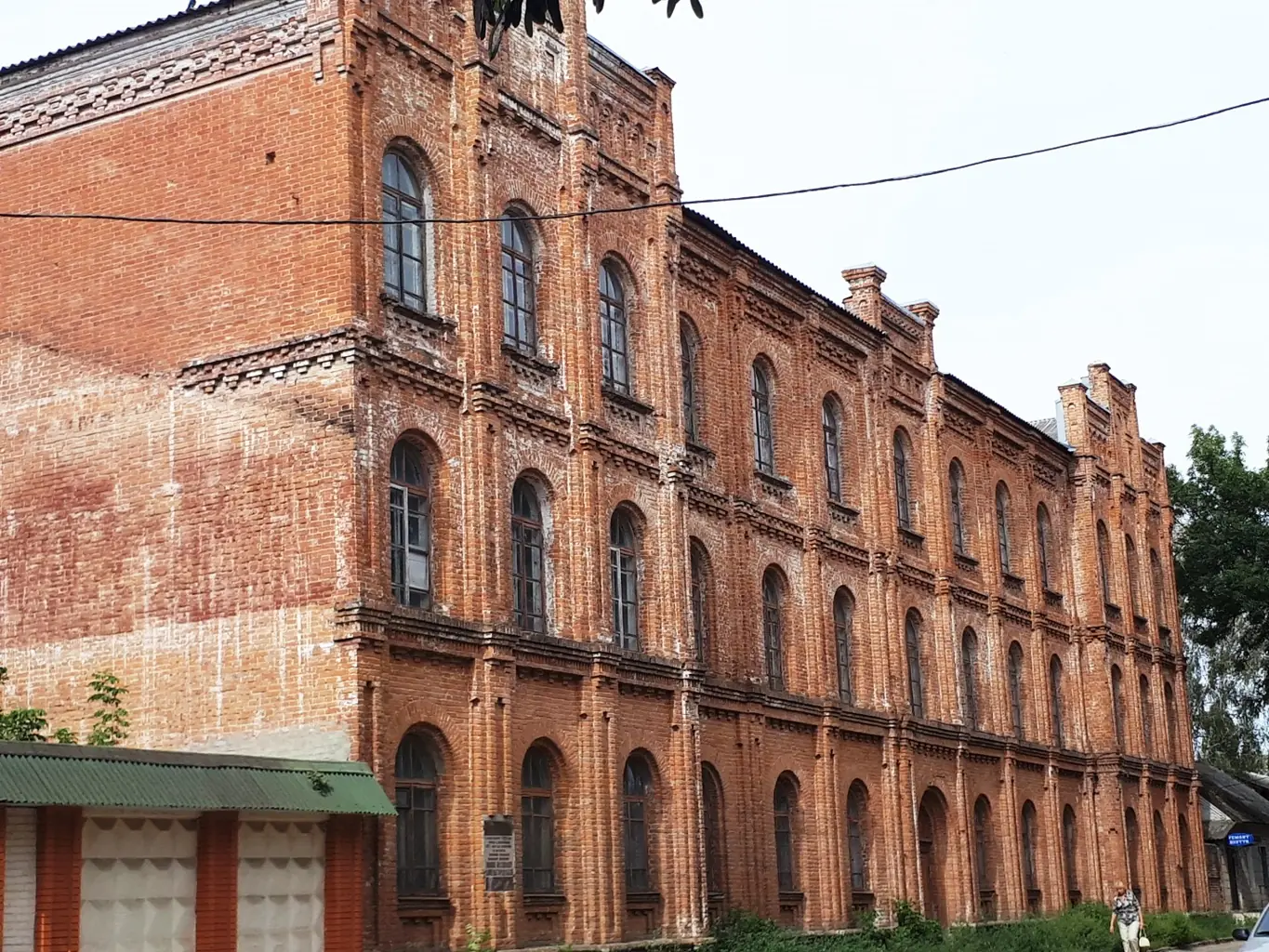
The theological school
The first stone three-storey building in Romny: the red house above the Sula was seen by everyone approaching the town from Zasullia. It trained clergy for the Poltava eparchy — a four-year course, more than two hundred and fifty pupils. In 1893 the eleven-year-old Pylyp Kapelhorodskyi was brought here; in 1897 he was expelled “for rebelliousness” and later described the school in his Notes of a Seminarian. Hryhorii Vashchenko, founder of the Ukrainian national system of education, studied here and taught Latin here from 1913. The school closed in 1918.
School · 1886School No. 3
Photo and story in preparation
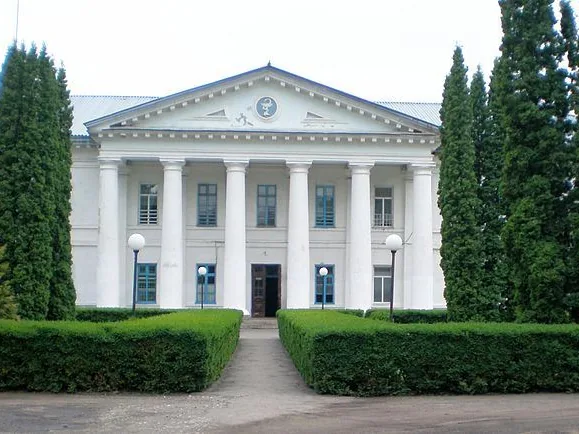
The charitable institution — county infirmary
A 120-bed hospital laid out the way a country estate is laid out: the main block with its six-column portico set back, four wings flanking the courtyard, a round flower bed before the front and a garden behind. The design was by Mykhailo Amvrosimov, provincial architect of Poltava, assisted by Andrii Kartashevskyi; it was built of local brick between 1822 and 1826. The portico is handled more boldly here than on any other classicist building in Romny, while the rest of the facade carries almost no ornament. The railings and the two guardhouses at the main gate still stand.
Hospital complex · 1822–1826Main building
Photo and story in preparation
Wings
Photo and story in preparation
Fence with guardhouses
Photo and story in preparation
Rubinchyk’s steam mill
Photo and story in preparation
Panevin’s apartment house
Photo and story in preparation
The 1926–27 apartment house
One of the first apartment blocks built in Romny after 1917, and a specimen of constructivism: the composition is made of purely utilitarian means — recessed bays with balconies, wide windows with reinforced concrete lintels and neat unrendered red brickwork. Four identical sections make up 61.4 metres and 24 flats; each has a hall, two rooms, a kitchen and a balcony — even on the ground floor. There were no lavatories: the town had no sewerage yet, but space for them was set aside in advance.
Apartment house · 1926–1927Railway workers’ apartment house
Photo and story in preparation
Merchants’ trading house
Photo and story in preparation
Bank (trading house)
Photo and story in preparation
Post office
Photo and story in preparation
County treasury
Photo and story in preparation
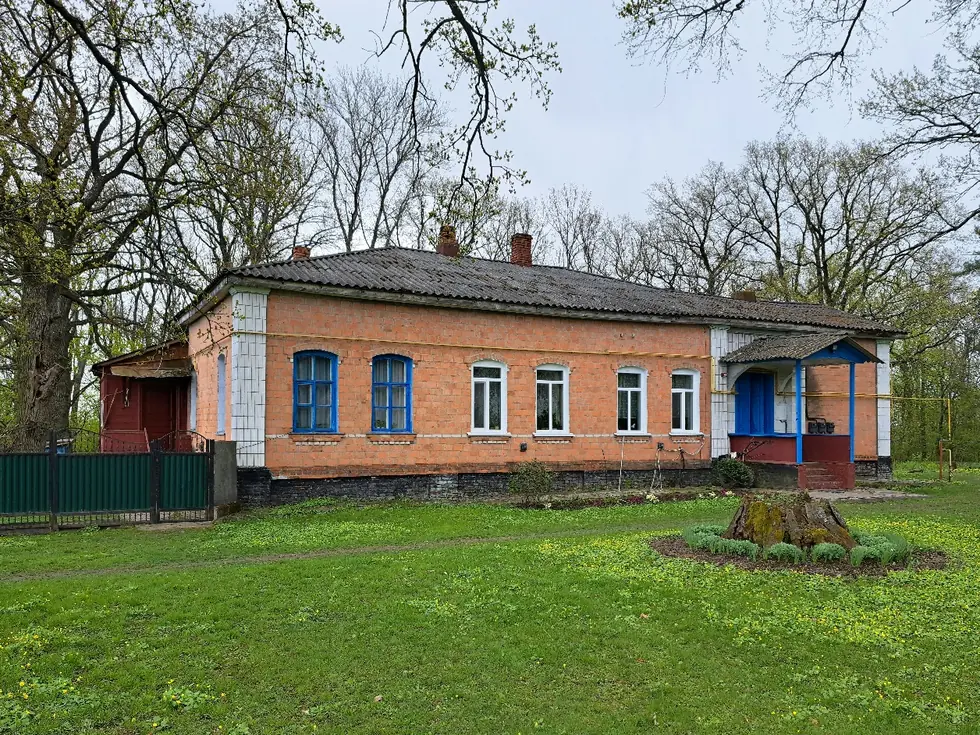
Bodiukh's country house
The estate of the notary Bodiukh on the edge of town, on a raised plateau above the steep right bank of the Sula. The house is single-storey, log-built on brick footings, plastered inside and out, with brick pilasters at the corners and beside the entrance; the rooms run in enfilade and the main door sits off-centre under a porch. A broad lawn with great spreading oaks separates it from the road; the cellars, the iron fence and the gates with their patterned grilles on stone piers all survive. A weather station has been here since 1928 — and that is probably why the house has reached us almost unchanged.
Country house · about 1905Bell tower
Photo and story in preparation
Ensemble of the Ascension Church
The Ascension Church is one of the most notable architectural landmarks of the town. Its ensemble brings together the church, the bell tower and the surrounding historic buildings, shaping the distinctive look of old Romny. This place is an inseparable part of the cultural heritage of the Sumy region.
Architectural ensemble
Holy Spirit Cathedral and St Basil's Church
The Holy Spirit Cathedral together with St Basil's Church form one of Ukraine's most valuable sacred ensembles. For centuries they were the spiritual centre of the town and witnesses to many historic events. Today they are among the chief architectural adornments of Romny.
Sacred ensembleSt Basil’s Church
Photo and story in preparation
Windmill, Zhytnie village
Photo and story in preparation
Granary, Levchenky village
Photo and story in preparation
Holy Trinity Church, Levchenky village
Photo and story in preparation
The Church of St John the Theologian
A three-part wooden church on a hill above the Sula, of which only the core survives: the nave, sanctuary and narthex of 1775–76. In 1891 the nave was widened crosswise, giving the plan the shape of a cross; in 1893 a bell tower was added to the west in a single structure with the church. Under Soviet rule the tops of the nave and bell tower were taken down and everything roofed with hipped roofs, so the original silhouette can only be guessed at. The walls of the three oldest sections still show axe work — the later additions were hewn differently.
Wooden church · 1776Windmill, Pustoviitivka village
Photo and story in preparation
St Nicholas Church
This brick church is a monument of national significance and one of the best-preserved churches of the Romny area. Its architecture combines classical forms of Ukrainian church building with the atmosphere of the nineteenth century. The church remains an important spiritual and historic landmark of the region.
Church · 19th c.The Church of the Nativity of Christ
A wooden church on a terrace above the river valley, among limes and maples more than two hundred years old. Of the building of 1764 only the six-sided sanctuary survives — the church was probably three-part with an octagonal nave, like most 18th-century churches here. What stands now is a 19th-century rebuilding: a single-domed church on a Latin cross plan with a three-tier bell tower beside the narthex. Outside the building is boarded and carved; inside there are fine wrought-iron grilles.
Wooden church · 1764Archaeology 26
The “Monastyryshche” hillfort
An oval hillfort on a low spur of the right bank of the Romen, near where the river joins the Sula. Marshy floodplain closes it on three sides; on the west run a crescent ditch and rampart. A cultural layer up to a metre thick holds material of the Bronze Age, of the Romny culture and of the 17th century. Mykola Makarenko investigated the site as early as 1901 and Oleksandr Sukhobokov excavated in the mid-1980s. It is from here that the Romny archaeological culture takes its name.
Hillfort of national significance · 9th c. BC – 13th c. AD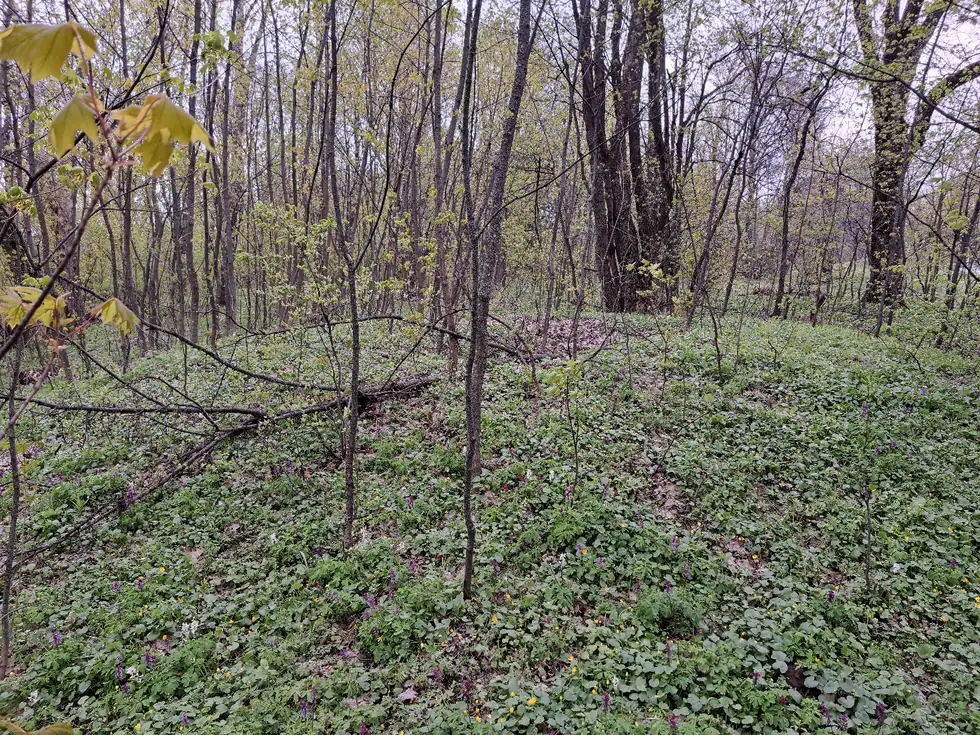
The burial mound cemetery by the weather station
Twenty mounds in a chain along the edge of the terrace on the right bank of the Romen — to the right of the road to Zhytnie, in the woods behind the weather station. The mounds are turfed and low, eight to twenty metres across and forty centimetres to a metre and a half high. Mykola Semenchyk found the cemetery in 1928 and Yurii Morhunov refined the plan in 1980, when one medium mound was excavated. Fragments of hand-made Scythian pottery turned up in it, and a robbed burial yielded a blue glass pendant of the 4th–3rd century BC.
Burial mound cemetery · 6th–3rd c. BCThe “Zamok” hillfort — citadel of the Romen of the chronicles
A spur between the Sula floodplain and a ravine, forty metres above the water meadows — the citadel of the Romen of the chronicles. A hillfort of the Romny culture stood here, then a fortress, a border outpost of the Polish–Lithuanian Commonwealth and the seat of a Cossack company. It consisted of the Lesser fort — the Zamok proper, 200 by 80–100 metres — and the Greater, 750 by 650. On the landward side the Zamok was defended by a ditch and a rampart that still survives in the north-west corner, with a timber wall and corner towers around the perimeter. The site was founded in the 9th–11th centuries.
Hillfort · 9th–18th c.Burial mound
Photo and story in preparation
Settlement, Bobryk village
Photo and story in preparation
Burial mound cemetery, Borozenka village ×3
Photo and story in preparation
“Vovkivtsi” burial mound cemetery
Photo and story in preparation
“Khmeliv” burial mound cemetery
Photo and story in preparation
Burial mound cemetery 1, Korzhi village
Photo and story in preparation
Burial mound cemetery 2, Korzhi village
Photo and story in preparation
Burial mound cemetery 3, Korzhi village
Photo and story in preparation
Settlement, Korolivshchyna village
Photo and story in preparation
Burial mound, Markivske village
Photo and story in preparation
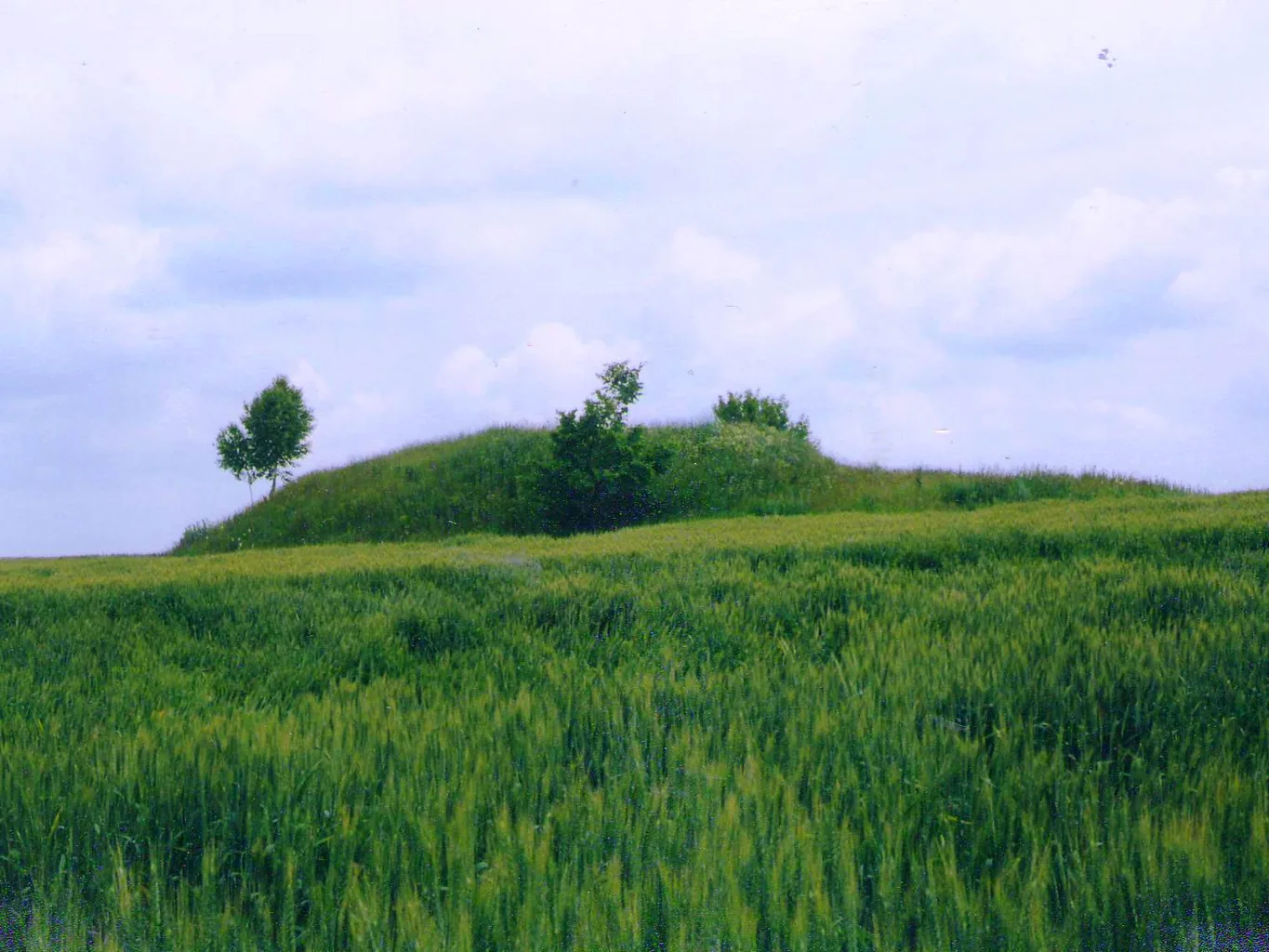
The “Swedish Graves” burial mound cemetery
Nine burial mounds and five saltpetre workings on the spurs of the right bank of the Romen. The largest mound is 85 metres across and two and a half high — a mid-20th-century map recorded six. The workings are the same mounds dug out by saltpetre makers: horseshoe or ring-shaped banks up to five metres high with a funnel-shaped pit in the middle and a crescent of spoil alongside, the longest running a hundred and ten metres. Mykola Makarenko found the cemetery at the start of the 20th century. Most of the mounds are now under the plough.
Mounds and saltpetre workingsSettlement, Pisky village ×2
Photo and story in preparation
Hillfort and settlement, Posad village
Photo and story in preparation
"Staichyn Verkh" burial mounds (Posullia kurhans)
Staichyn Verkh is not a single mound but an entire Scythian necropolis on the high plateau above the Sula. Over 600 mounds were counted here at the start of the 20th century; some 250 are still visible. The largest carry their own names — Starsha Mohyla, Tsarska, Storozhova. Starsha Mohyla stands 21 metres high and remains the tallest kurhan on the Dnipro's left bank. They were raised in the 6th–4th centuries BC.
Burial mounds · Scythian era“Solodka 1” burial mound cemetery, Zahrebellia village
Photo and story in preparation
“Solodka 2” burial mound cemetery, Zahrebellia village
Photo and story in preparation
Burial mound, Sadove village
Photo and story in preparation
Burial mound cemetery, Yarmolyntsi village
Photo and story in preparation
Burial mound cemetery No. 2, Yarmolyntsi village
Photo and story in preparation
“Luchky” burial mound cemetery
Photo and story in preparation
History 75
Group of three graves: a mass grave of Soviet soldiers and the individual graves of M. Varchuk and H. Prokopenko, Heroes of the Soviet Union
Photo and story in preparation
Group of three mass graves of Soviet soldiers
Photo and story in preparation
Group of 10 mass and 22 individual graves of Soviet soldiers and victims of Nazism
Photo and story in preparation
Mass grave of Soviet soldiers ×2
Photo and story in preparation
Group of four mass graves of Soviet soldiers with a monument to local servicemen
Photo and story in preparation
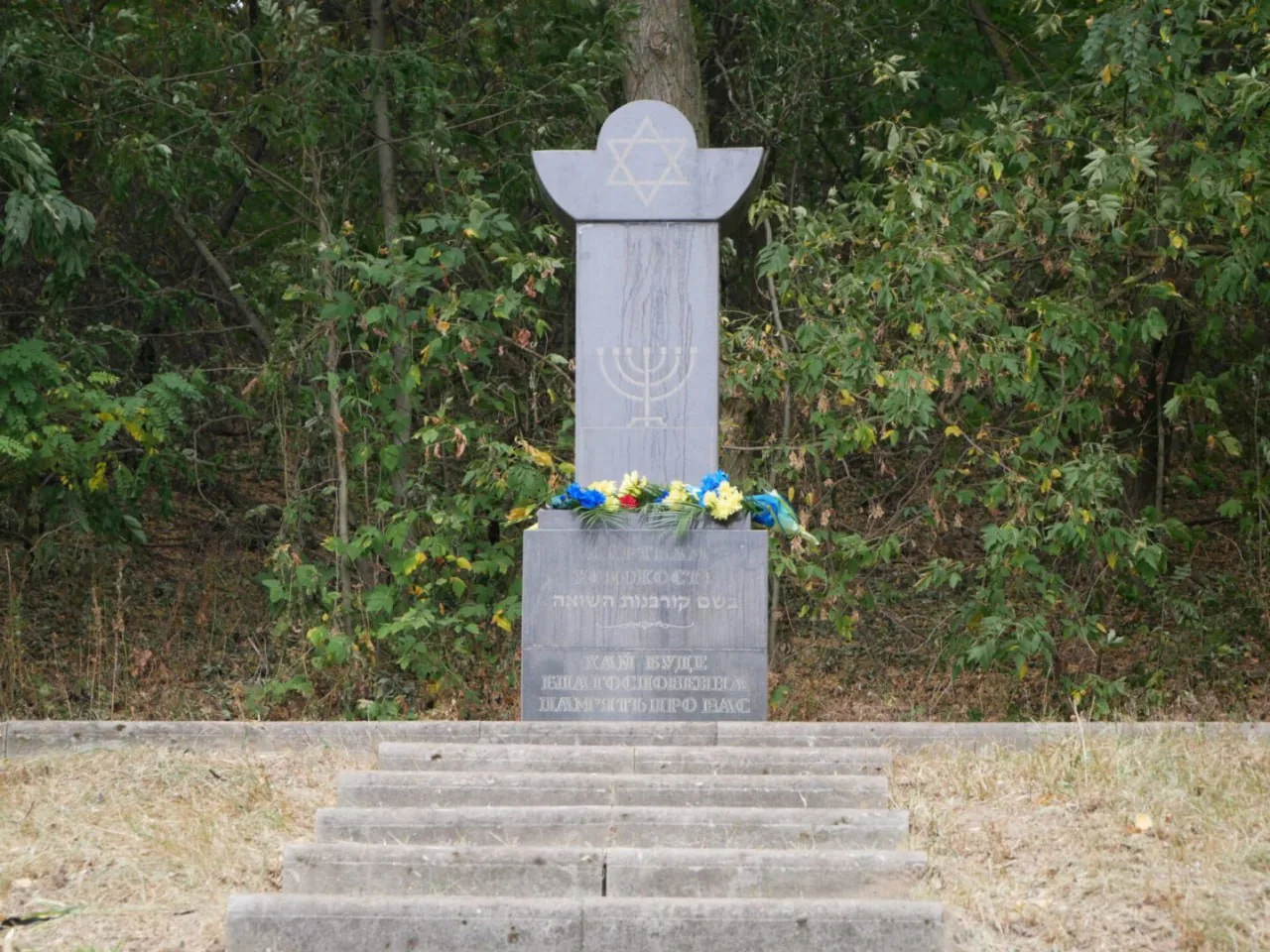
Mass grave of the victims of Nazism
On 10 November 1941, on the slope of Zelenyi Yar beside the Bakhmach–Kremenchuk railway line, the Nazis shot more than three thousand Jews of Romny. The grave was marked in 1967 with a rendered brick obelisk 3.75 m high; in 2005 it was rebuilt with slabs of black labradorite. Above the menorah is carved “May your memory be blessed”, in Ukrainian, Hebrew and Russian. The site lies outside the city among the trees, and going there is a decision of its own.
Memorial · 1941Mass grave of victims of Nazism ×2
Photo and story in preparation
Site of the well into which the bodies of Nazi victims were thrown
Photo and story in preparation
Grave of O. Bozhko, killed in Afghanistan
Photo and story in preparation
Grave of O. Davydenko, killed in Afghanistan
Photo and story in preparation
Grave of S. Zinchenko, killed in Afghanistan
Photo and story in preparation
Grave of O. Kondakov, killed in Afghanistan
Photo and story in preparation
Grave of A. Umanets, killed in Afghanistan
Photo and story in preparation
Grave of S. Shepel, killed in Afghanistan
Photo and story in preparation
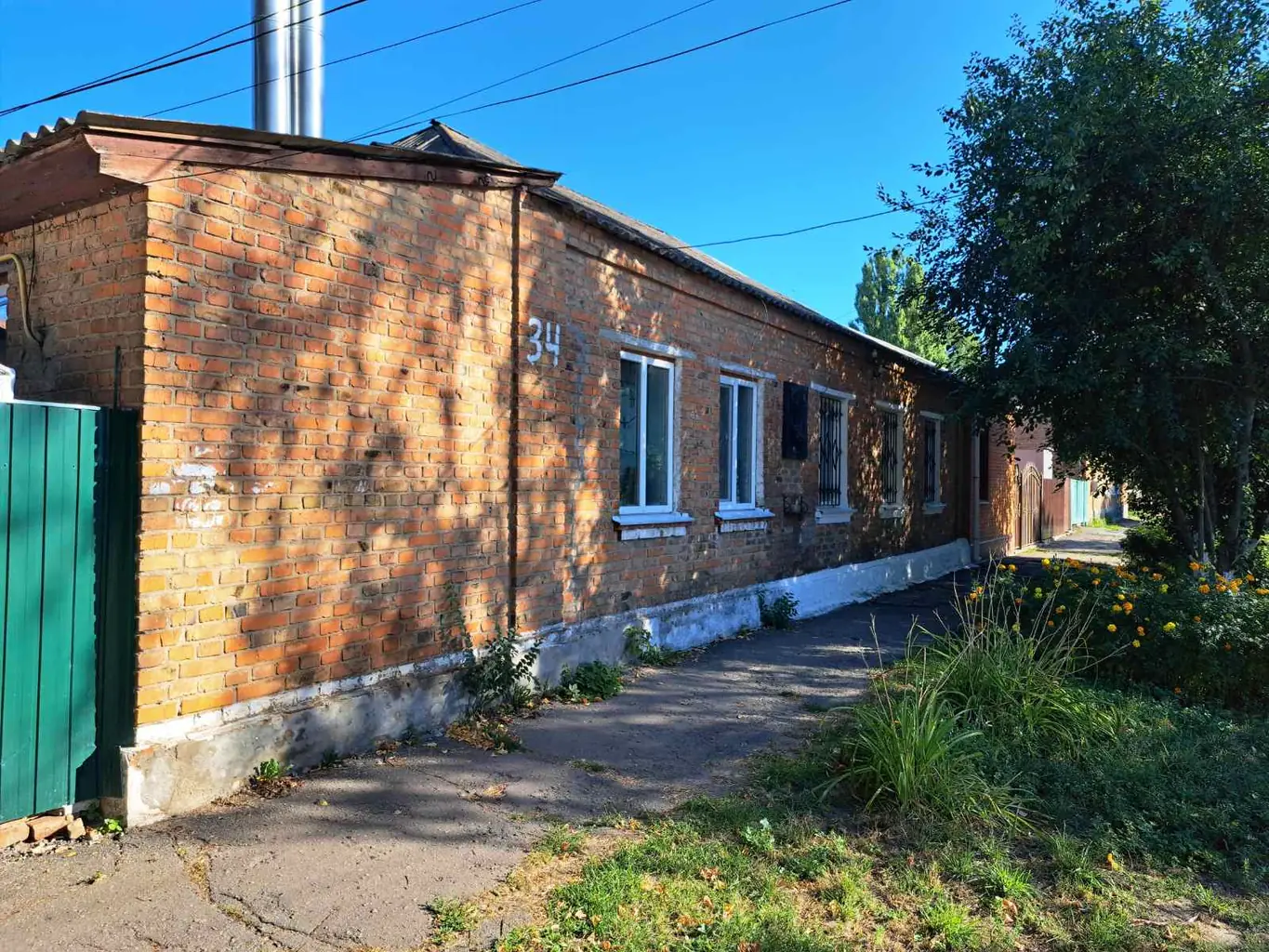
The house where Ivan Kavaleridze lived
A single-storey house with two entrances, timber-built and faced with brick, from the early 20th century. Ivan Kavaleridze (1887–1978) — sculptor, film director and playwright — lived here from 1917 to 1923. In Romny he worked as a designer and director at the Ukrainian theatre, taught in schools and made the monument to Taras Shevchenko which in 1918 became the world's first monumental statue of the poet. The marble plaque with a bronze relief by Ivan Makohon was set into the facade in 1987.
Historic site · 1917–1923House where Mykola Bazhanov, Ukrainian writer, lived and worked
Photo and story in preparation
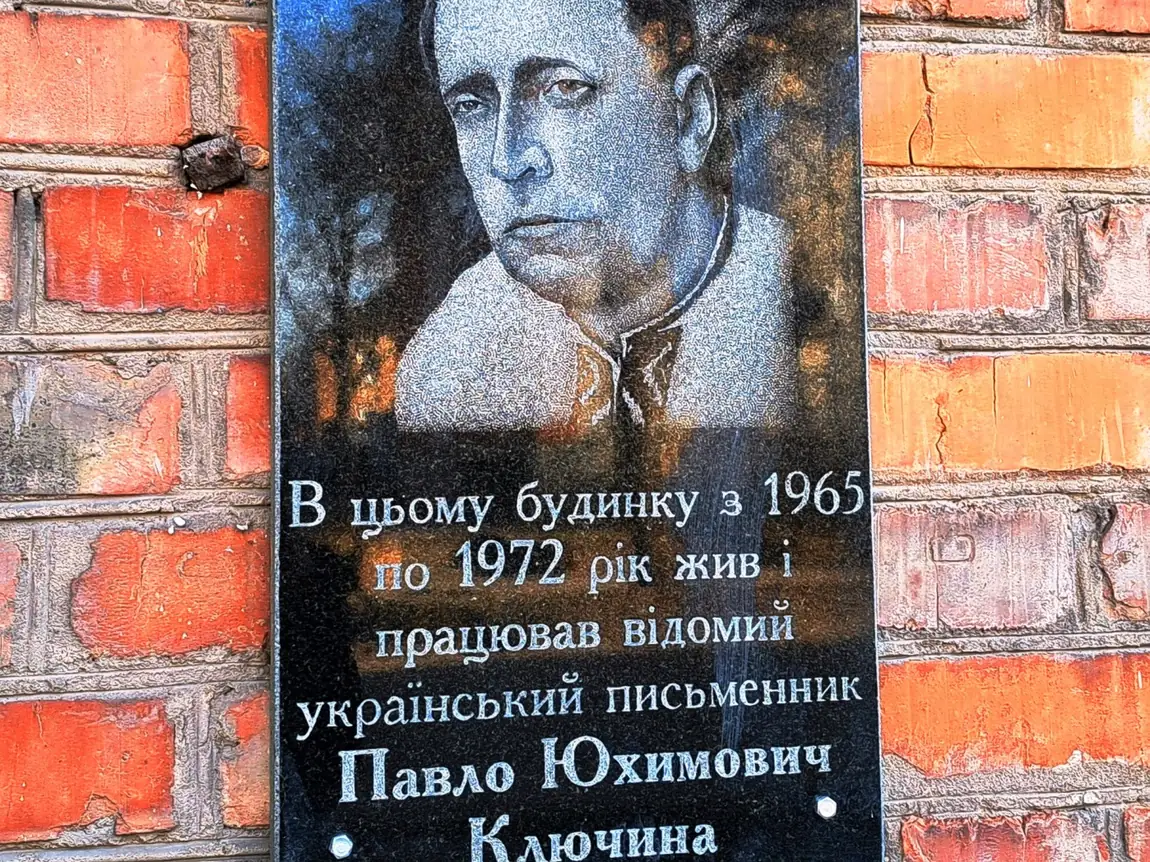
The house where Pavlo Kliuchyna lived
A three-storey brick building of 1964; flat number two on the ground floor, three rooms, 39 square metres. Pavlo Kliuchyna (1914–1972) lived and worked here from 1965 to 1972 — a fabulist and prose writer who in his last three years was also a researcher at the Romny Local History Museum. He published the collections Fables, Nettle, Nightingales and Frogs, A Fly in the Apiary and Drops of Earthly Colour, and co-wrote a local history essay on Romny. The granite plaque between the windows of his flat was put up in 1972, immediately after his death.
Historic site · 1965–1972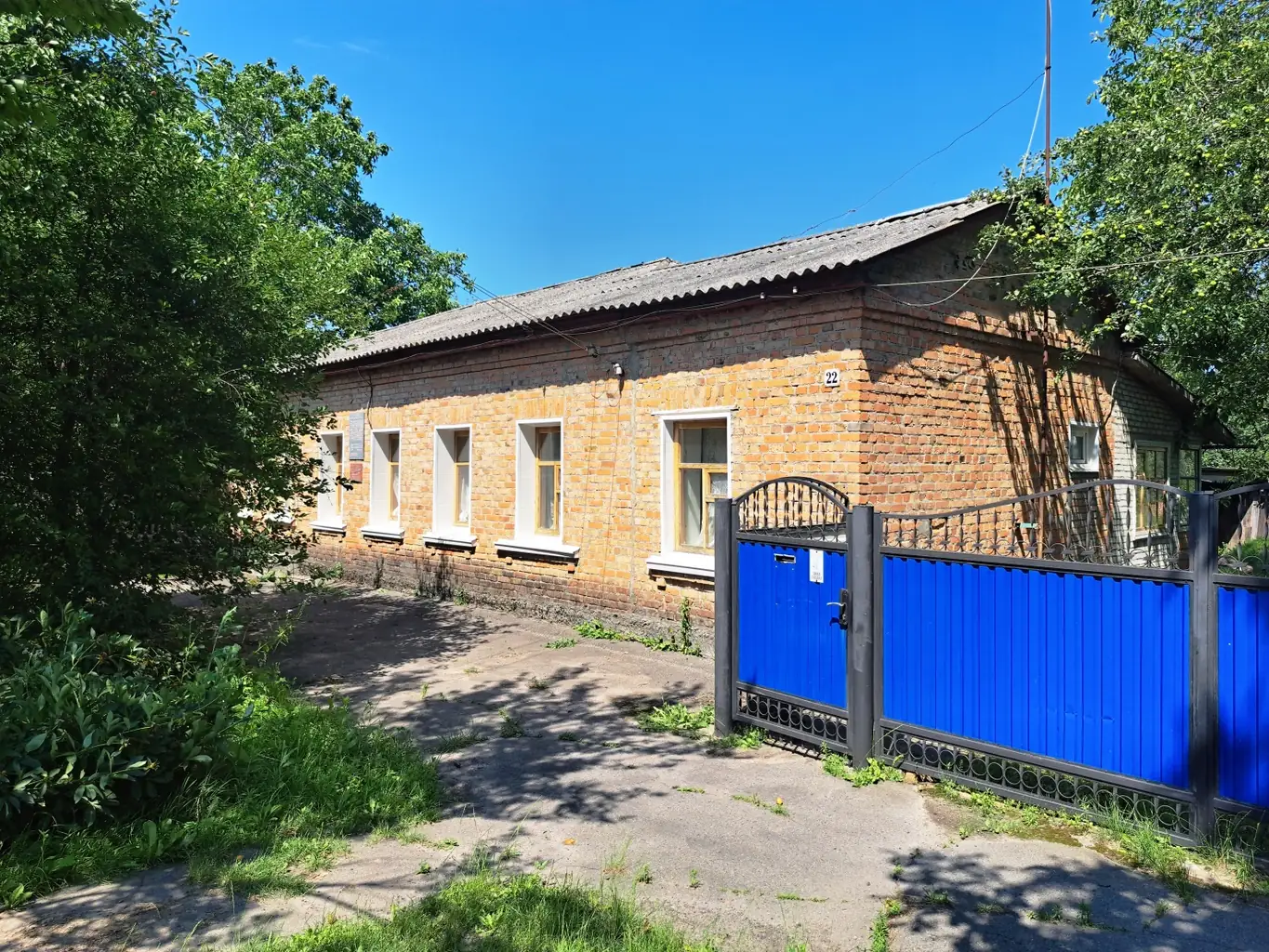
The house where Oleksandra Derevska lived
A single-storey wooden house faced with brick — 102 square metres for a family in which 48 children grew up. Oleksandra Derevska (1902–1959) moved to Romny in 1945 and that same year took an infant from the city babies' home. Ten more children followed from the orphanage in 1946, five babies in 1947, three in 1949 and another five in 1950 — children of eight nationalities. A boarding school with a memorial museum and a minor planet carry her name. The two cast-iron plaques on the facade were put up in 1974.
Historic site · 1945–1959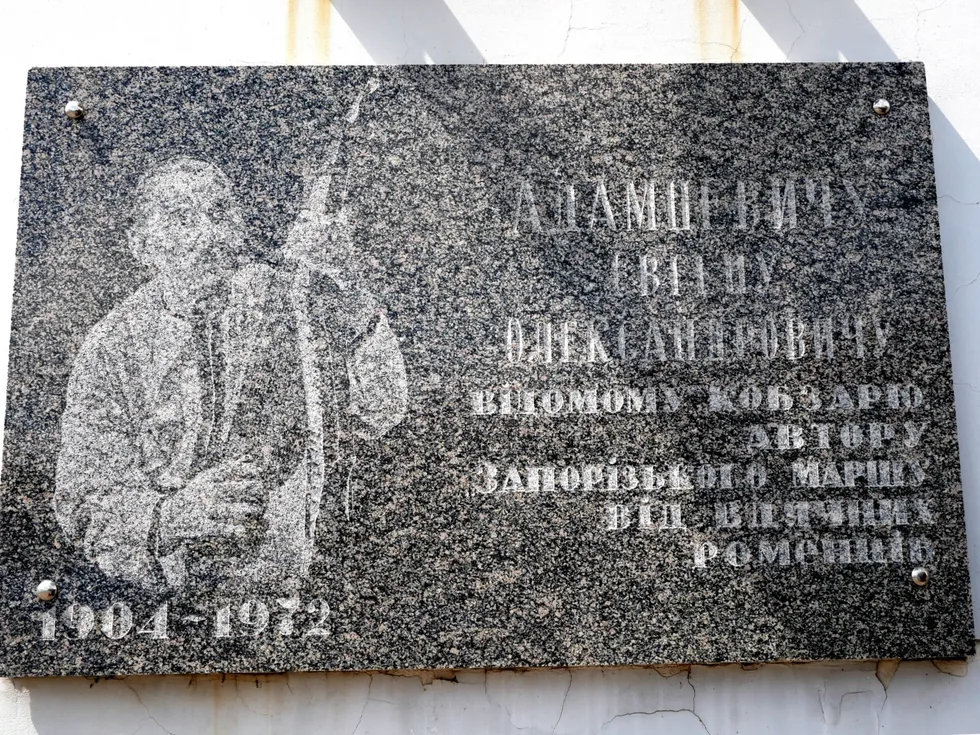
The house where Yevhen Adamtsevych lived
A single-storey brick house with a semi-basement, built in the brick style. It was in that semi-basement that Yevhen Adamtsevych (1904–1972) spent his childhood — the kobzar whose name is attached to the Zaporozhian March. He began to lose his sight at the age of two; the family moved to Romny when he was eleven, and it was here that he started to play the bandura at fairs. He took lessons from the kobzar Maksym Oleksiienko, toured from 1927, performed at the all-union gathering of folk singers in 1938 and played in Kyiv at kobzar concerts in 1968–69. A plaque with his carved portrait and bandura is set into the facade.
Historic siteHouse that hosted the first district conferences of 1923: of the Communist Party on 9 March, of the Union of Soviet Employees on 5 September and of the trade unions on 7 October
Photo and story in preparation
House that held the county revolutionary committee from 5 January to 21 March 1918
Photo and story in preparation
Grave of I. Stratiichuk, Hero of the Soviet Union
Photo and story in preparation
Grave of Oleksandra Derevska, Mother Heroine
Photo and story in preparation
The grave of Ivan Kurylov
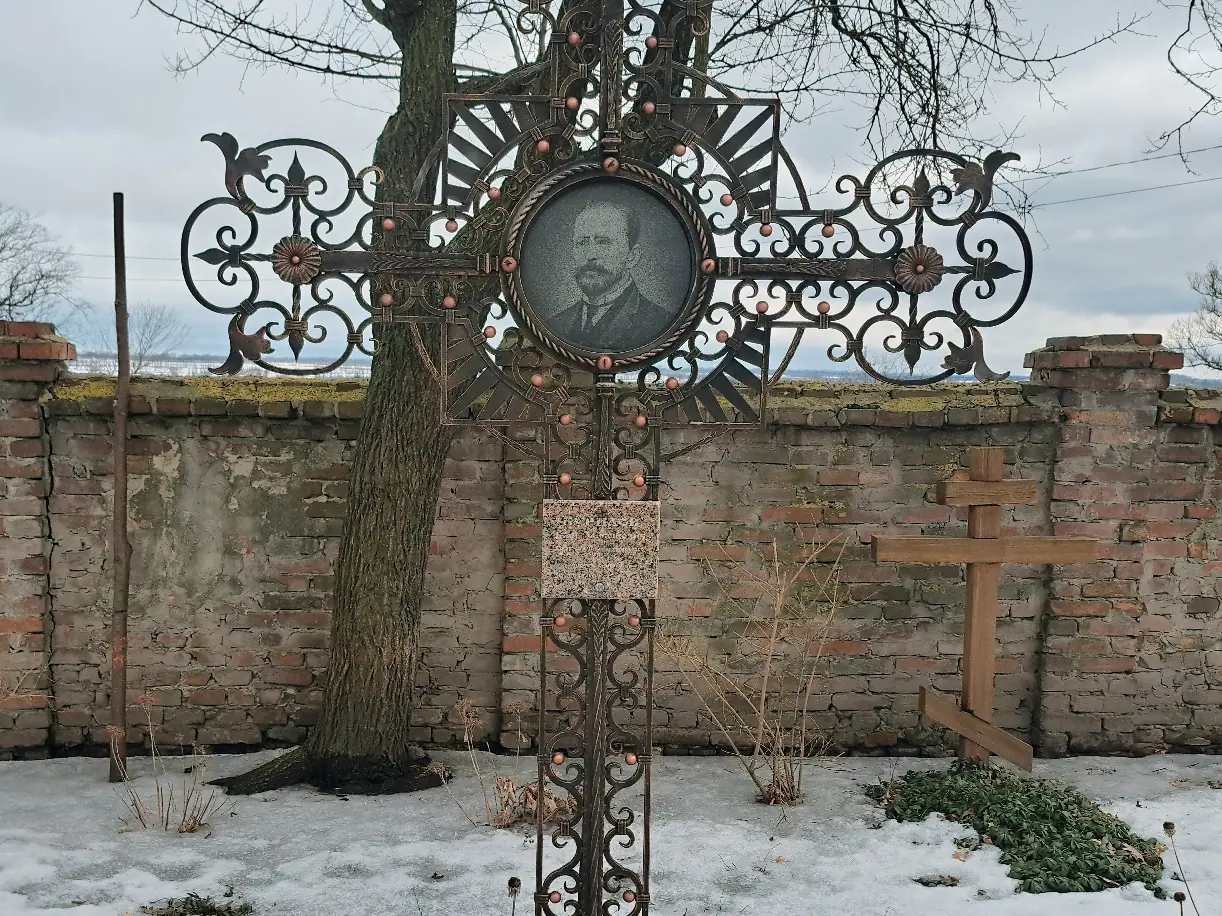
A wrought-iron cross with a memorial inscription, set up in 1916 beside the Holy Spirit Cathedral, where Ivan Kurylov served as churchwarden for sixteen years. The son of a soldier, he worked in the town council from the age of thirteen — as a clerk, a scribe and a bookkeeper — ran a candle works and spent his life gathering material on the history of Romny. In 1898 he published Romny Antiquity, the first genuinely historical study of the town's record, with a description of every church; earlier he had published an account of the Holy Spirit Cathedral, and later his recollections of the Illinskyi fair. His portrait is set in the medallion of the ironwork.
Historic site · 1916Grave of Mykola Bazhanov, Ukrainian writer
Photo and story in preparation
Grave of Pavlo Kliuchyna, Ukrainian writer
Photo and story in preparation
Grave of Hanna Zatyrkevych-Karpynska, a leading figure of Ukrainian theatre
Photo and story in preparation
Grave of Stepan Shkurat, People’s Artist of Ukraine
Photo and story in preparation
Grave of I. Svirskyi, veteran of the first defence of Sevastopol
Photo and story in preparation
Site of the Illinskyi fair
Photo and story in preparation
Mass grave of Soviet soldiers, Batsmany village
Photo and story in preparation
Mass grave of Soviet soldiers and victims of Nazism, with a monument to local servicemen, Bilovod village
Photo and story in preparation
Mass grave of Soviet soldiers, Bobryk village ×2
Photo and story in preparation
Grave of a Soviet soldier, Bobryk village
Photo and story in preparation
Grave of N. Liubarskyi, Soviet soldier, Bobryk village
Photo and story in preparation
Site where the crew of a Soviet T-34 tank died, Bobryk village
Photo and story in preparation
Mass grave of Soviet soldiers, Vedmezhe village
Photo and story in preparation
Group of three graves: one mass and two individual graves of Soviet soldiers, Velyki Bubny village
Photo and story in preparation
Mass grave of Soviet soldiers, Velyki Bubny village
Photo and story in preparation
Mass grave of Soviet soldiers, Vovkivtsi village ×2
Photo and story in preparation
Memorial sign to Oleksandr Potebnia, Ukrainian philologist, Havrylivka village
Photo and story in preparation
Mass grave of Soviet soldiers, Halka village
Photo and story in preparation
Mass grave of Soviet soldiers, Herasymivka village
Photo and story in preparation
Mass grave of victims of Nazism, Herasymivka village
Photo and story in preparation
Grave of a Soviet soldier, Zhytnie village
Photo and story in preparation
Mass grave of Soviet soldiers, Zhytnie village
Photo and story in preparation
Mass grave of Soviet soldiers, Zaruddia village
Photo and story in preparation
Grave of M. Popov, Soviet soldier, Zelenivshchyna village
Photo and story in preparation
Mass grave of Soviet soldiers, Kalynivka village
Photo and story in preparation
Mass grave of Soviet soldiers, 1943, and a memorial sign to fallen local servicemen, Korzhi village
Photo and story in preparation
Grave of S. Musin, Soviet soldier, with a monument to local servicemen, Levchenky village
Photo and story in preparation
Mass grave of Soviet soldiers and a memorial sign to A. Danchenko, Male village
Photo and story in preparation
Mass grave of Soviet soldiers with a monument to local servicemen, Markivske village
Photo and story in preparation
Grave of P. Khandoha, full holder of the Order of Glory, Matlakhove village
Photo and story in preparation
Mass grave of Soviet soldiers, Mykolaivka village
Photo and story in preparation
Mass grave of victims of Nazism with a monument to local servicemen, Moskalivka village
Photo and story in preparation
Grave of V. Karikov, Soviet soldier, with a monument to local servicemen, Ovlashi village
Photo and story in preparation
Group of two mass graves of Soviet soldiers, Oleksiivka village
Photo and story in preparation
Mass grave of Soviet soldiers, Pisky village
Photo and story in preparation
Mass grave of Soviet soldiers with a monument to local servicemen, Pohozha Krynytsia village
Photo and story in preparation
Mass grave of Soviet prisoners of war and victims of Nazism, Posad village
Photo and story in preparation
Grave of Ye. Horlov, Soviet soldier, Posad village
Photo and story in preparation
Grave of a Soviet soldier, Pravdiuky village
Photo and story in preparation
Monument to Petro Kalnyshevsky
Pustoviitivka is considered the birthplace of Petro Kalnyshevsky, the last kish otaman of the Zaporozhian Sich. The monument honours the Cossack leader who became a symbol of resilience, courage and the struggle for Ukrainian statehood.
MonumentGroup of four mass graves of Soviet soldiers, Pustoviitivka village
Photo and story in preparation
Grave of H. Dudka, Soviet soldier, Pustoviitivka village
Photo and story in preparation
Mass grave of Soviet soldiers, Pustoviitivka village
Photo and story in preparation
Mass grave of Soviet soldiers, Ripky village
Photo and story in preparation
Mass grave of Soviet soldiers with a monument to local servicemen, Rohyntsi village
Photo and story in preparation
Grave of M. Hlushchenko, killed in Afghanistan, Senenkove village
Photo and story in preparation
Mass grave of Soviet soldiers, Yarmolyntsi village
Photo and story in preparation
Recently identified sites 38
Building of the Romny Local History Museum, where Pavlo Kliuchyna worked (memorial plaque by the sculptor Ya. Krasnozhon)
Photo and story in preparation
Memorial sign to Petro Kalnyshevsky
Photo and story in preparation
Memorial sign to natives of the Romny area who died in Afghanistan
Photo and story in preparation
Memorial sign to the victims of the Chornobyl disaster
Photo and story in preparation
Memorial sign to the victims of the Holodomor of 1932–1933
Photo and story in preparation
“Plavynyshche-Quarry” settlement, Plavynyshche village
Photo and story in preparation
“Plavynyshche-1” settlement
Photo and story in preparation
“Mykolaivka-7” settlement, Mykolaivka village
Photo and story in preparation
“Staichyn Verkh-3” settlement, Zalutske village
Photo and story in preparation
“Korzhi” hillfort, Korzhi village
Photo and story in preparation
House of the Holy Spirit Cathedral’s priest
Photo and story in preparation
Trading rows of the Hostynnyi Dvir square: the trading rows building
Photo and story in preparation
Trading rows of the Hostynnyi Dvir square: the trading rows building
Photo and story in preparation
City council building
Photo and story in preparation
Railway station complex: the passenger station building
Photo and story in preparation
Railway station complex: the Romny locomotive depot
Photo and story in preparation
Apartment house ×10
Photo and story in preparation
Public building
Photo and story in preparation
Bank building
Photo and story in preparation
Mansion
Photo and story in preparation
Vakhrameiev’s mansion
Photo and story in preparation
Romny State Bank branch complex: the bank manager’s house
Photo and story in preparation
Vakhrameiev’s tobacco factory complex
Photo and story in preparation
Priest’s house
Photo and story in preparation
Brewery building
Photo and story in preparation
School ×2
Photo and story in preparation
Merchants’ trading house
Photo and story in preparation
The well in Redchyn Yar
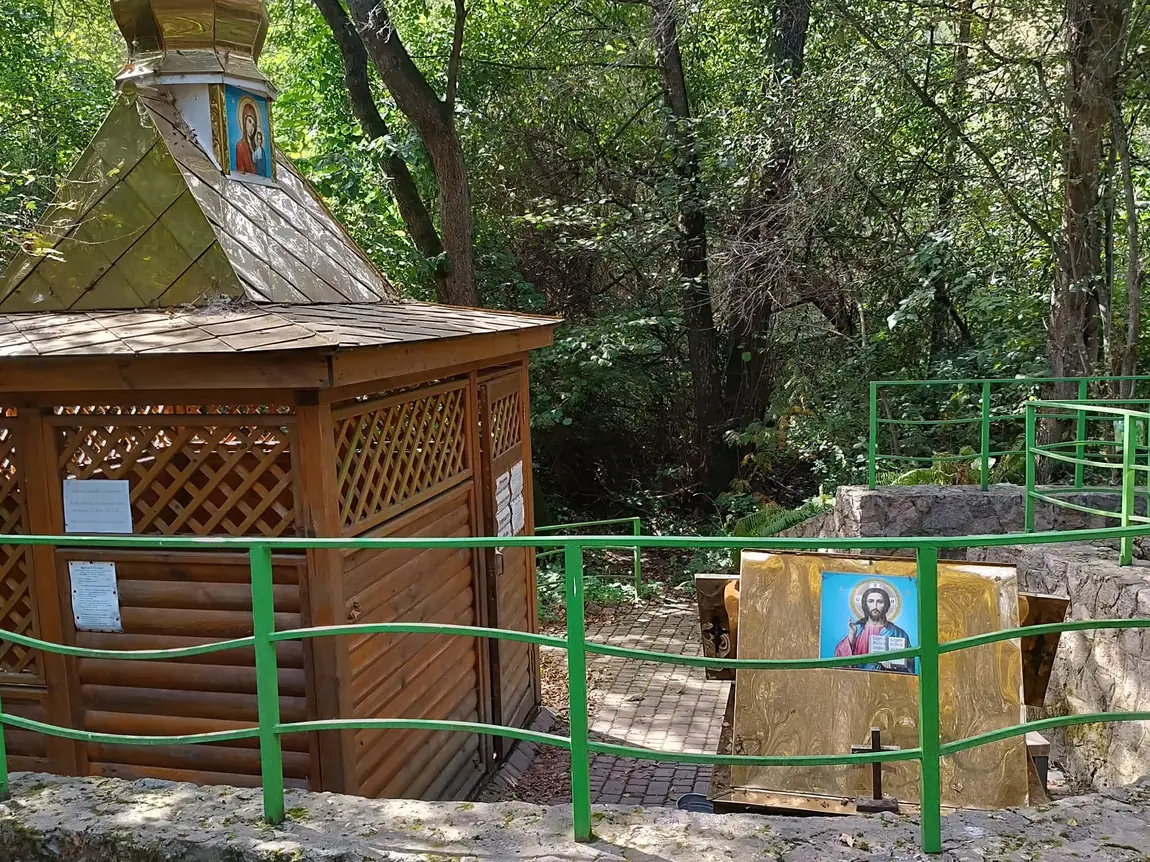
A spring in a ravine beyond the western edge of Romny, in the place known as Redchyn Yar. A stream runs from the well into the Lozivka. The story goes that a girl herding cattle here dreamed of an old man who told her to dig in a certain spot — her spade uncovered an icon of the Kazan Mother of God, and a spring broke through the earth. The icon was twice carried to churches in Romny and twice returned to the ravine; it was then left in the church of St Stephen in Ovlashi. Three times a year the parishioners walk in procession from there to the well.
Hydrological nature monument · since 2017